A city site inside Fushidhiggaru Lagoon
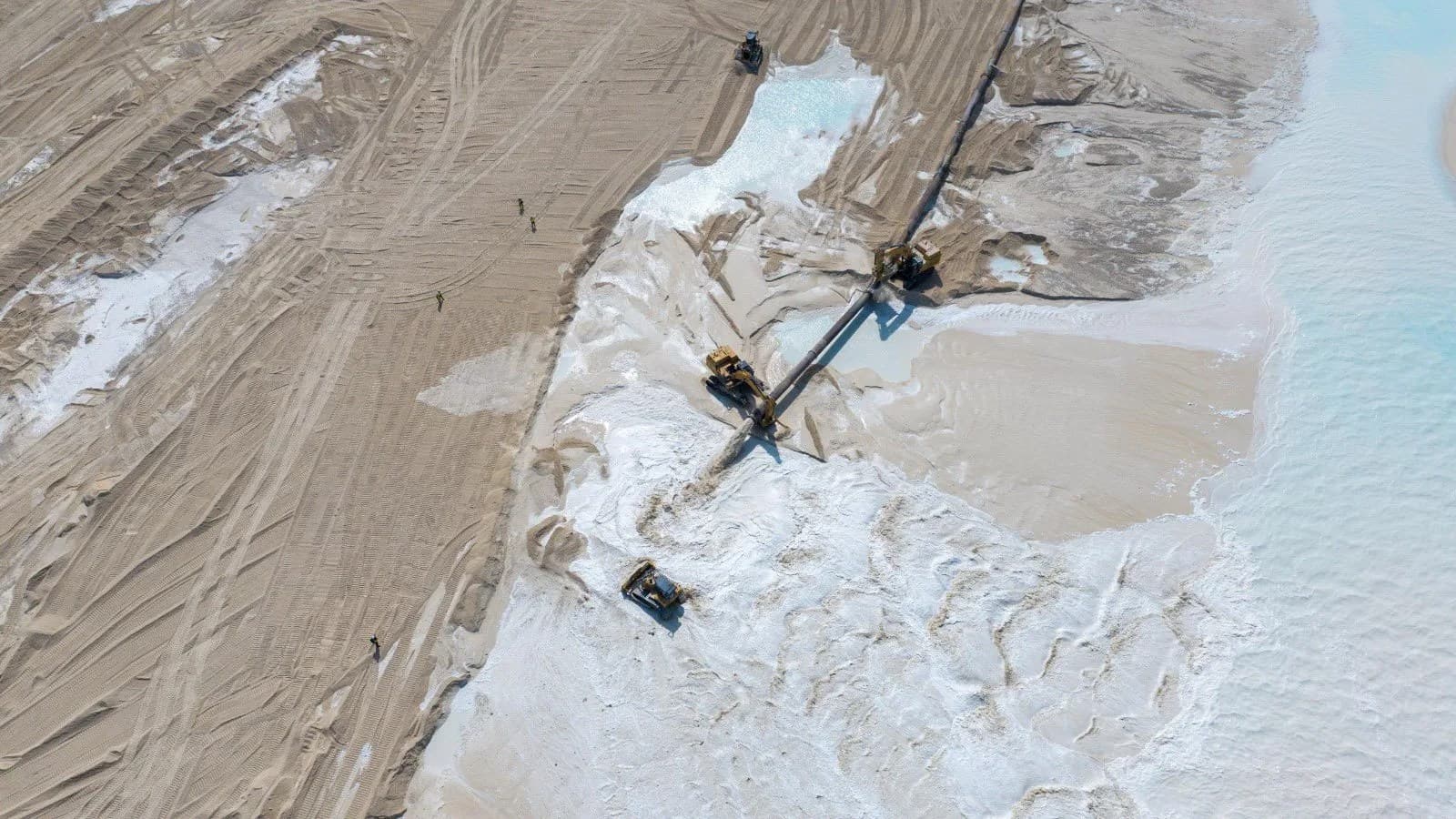
Ras Malé is being formed in Fushidhiggaru Lagoon near the Maldives' established capital region. The site sits within reach of Malé, reclaimed Hulhumalé, Velana International Airport and other inhabited islands in Kaafu Atoll. That location explains the project's urban purpose: it is intended to add land where housing, employment and public services are already under intense pressure.
The plan covers roughly 1,150 hectares, although published totals sometimes vary by a few hectares. At that scale, the reclaimed platform is not simply an island extension or a housing estate. It is large enough to hold multiple neighbourhoods, business areas, institutions and waterfronts, provided those pieces are connected by a coherent street and transport network.
Why a lagoon became the chosen ground
A lagoon is a shallow marine area enclosed or sheltered by reef formations. For engineers, suitable depths can make sand filling more practical than building in open ocean. Fushidhiggaru also offers a broad continuous area close to the country's largest concentration of people and economic activity, a combination that few natural islands can provide.
Suitability for construction does not remove ecological sensitivity. Lagoons carry water between reefs and support habitats that can be affected by dredging, sediment and changed currents. The location therefore creates two simultaneous planning tasks: forming stable land and demonstrating how surrounding marine systems will be monitored and protected through construction and later urban use.
Ras Malé is best understood as a new piece of the capital region, not a distant island development disconnected from Malé's daily life.
Part of a three-centre capital region
Malé remains the political and commercial core, while Hulhumalé shows how reclaimed ground can absorb homes, offices and institutions over time. Ras Malé is conceived as another major centre rather than a replacement for either island. Its success will depend on whether people can move among all three without expensive, unreliable or car-dependent journeys.
Possible connections discussed around the project include ferries, bridges, road links, buses and pedestrian routes. These should be treated as planning possibilities until routes, budgets and delivery dates are confirmed. The form of those connections will influence where residents work, how students reach schools and whether the airport feels genuinely close in daily travel rather than only on a map.
Location is an opportunity, not a guarantee
Proximity to the airport could support hospitality, trade and services. Nearby urban populations could sustain shops, clinics and offices from the first phases. Yet a well-placed site can still underperform if public facilities arrive late, neighbourhoods are separated by wide roads or waterfront land becomes inaccessible to ordinary residents.
The most useful way to follow Ras Malé is therefore relationally: measure travel times to Malé and Hulhumalé, track ferry and bridge commitments, and compare the delivery of homes with schools, healthcare and employment space. Fushidhiggaru Lagoon gives the project room and strategic position. Planning choices will determine whether that geography becomes a connected city.